As I stood with my sweetheart watching a ring of folk dancers on the island of Seurasaari on Midsummer’s Day, one leapt out of the circle and grabbed my hand, pulling me into the middle. In my red sweater, I matched their colorful costumes. He lifted me up and spun me around at the heart of the ring. Excited, I hoped the Finn was watching and would be proud of me.
Some Seurasaari dancers; Photo: Shutterstock
That evening, as the all-night bonfire was lit, I picked some wildflowers on the island and kept them with me as a memento. When we returned to the apartment, I put them inside one of his desk drawers as a keepsake.
Two years later, when we were engaged, he opened that drawer and saw the flowers. I prompted, “What is that?” He answered, “Oh, it’s just some weeds!” And threw them in the garbage can.
Then I knew that the longest day of the summer was the longest day of my romance.
It’s 2:00 p.m. on a Thursday. I’ve been in bed for about an hour, and this is the point when I decide to listen to the demon at his strongest and turn over, or make an attempt to defy him and get up.
At 5:00 a.m., I was fine. Around 8:00, I began to be low. At 10:00, the demon brought me past ghosts to fight. At 11:00, it brought me a bad period in life to think about, and I succumbed to buy something online. At 12:00, I realize I forgot my 4 meds, and take them. I know that it will be at least 2 hours until I feel OK enough to do something.
So now, 2:00. The demon is saying, “You still feel like shit. Wait until 3:30, at least.” At 5:30, my husband will be home, and I am in yoga pants and an army surplus t-shirt. I want to have some food ready.
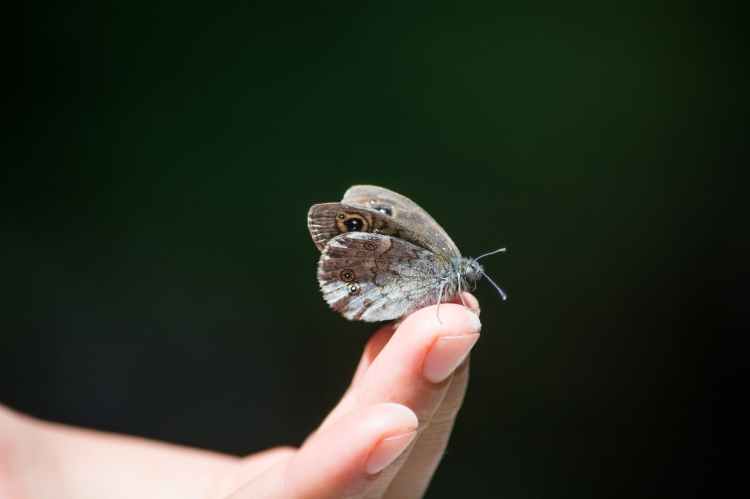
I fling the covers off, swing my legs over the side of the bed, and drop onto my feet before the demon knows it’s been betrayed. As I walk down the stairs, a small, invisible butterfly passes me to say this could be a blog post. At 2:45, I boil water for pasta, and at 3:15, I finish cooking. I start the post.
The demon says, aren’t you being too honest? And even if you’re honest, isn’t depression a cliche? Is this an excuse for self-pity? People don’t really give a damn, or want to know your boring shit.
The demon’s last shot is its most potent one. It knows that I write personal topics or essays and later deeply regret doing them. It’s now 3:40. I get the laptop and start typing, and the demon asks if what I’m saying needs to be said, just like it has been by so many people, so many times, even if no one reads it or feels moved.
With that, the demon catches my attention and kindles a tiny flame. Does what I’m saying need to be said? I’ve written journals for nearly 30 years because my mind needed to say things, even if it’s only to a person who cursorily scans a book or two of content after I’m gone and wonders at how absolutely boring and unexciting it all is.
I think of all the many times the demon has changed the course of my life. It’s happened less since I started journaling. If I can only write enough words, maybe I can quiet the searing doubts that depression brings.
The pills dull the pain, but they don’t stop the thoughts. The writing does.
Although my camel coat was 2 sizes large, I hugged it tightly around my chest on the way into the thrift shop for my date at the opera.
The suit I found was green boucle, a froth of fibers with 3/4 sleeves and an A-line skirt. While listening to my Sarah Vaughan CD, I pinned the sides of the 20-year-old skirt into a pencil shape. Thankful there was no lining, I sewed the seams up to the zipper and then made a camellia-shaped flower pin from the scraps. Then I washed some underwear and hose in the sink.
I had peanut butter and Saltines before Peter came to pick me up. He asked where to go for drinks. Knowing that I would be expected to pay, I brought out two beers. Then we set out into the chilly January evening for Madame Butterfly.
After the performance, Peter said he would probably spend the Spring studying in London. When I asked when he’d return, he added that he might spend Summer there as well. That night, I let him stay, and he left without a sound early the next morning. I waited the next six months with no letter or call.
In the winter, Washington Square is a gauntlet of ice and snow, with pigeons peppering the walkways in their chest-ruffed beauty. Stanford White’s Washington Square Arch – the gateway between uptown and downtown for neighborhood residents – tells time with its shadow over the square.
It was here that I met a man dressed in a light gray bomber jacket, light pants, and a feathered fedora. He had a fleshy pink-cheeked smile and a rounded nose with wire glasses. He leaned against the interior of the arch on one black-gloved hand and crossed his ankles. With his other hand, he sighted up the sidewalks of Fifth Avenue and back down to the park with pale blue eyes until he saw me.
Photo by Shutterstock.
“You look like Santa,” I said. I shuffled my running shoes and flapped my loden green coat. “You look like an elf,” he countered. And thus began something that many people remember from some point in their lives – a Christmastime romance, with tree-toting, wreath-hanging, roast-cooking, and party-going.
In April of the next year, just as the snow had thawed and buds began to dot the park landscape, I happened onto a 3-bedroom apartment in Washington Heights (about 155 blocks north). My friend helped me carry 4 boxes of belongings from the bedroom I rented on Fifth Street over to Astor Place. After a disagreement about eating and the boxes, he put them down, hailed a cab, and left me there.
About 2 months later, I received a letter written in architectural print: “Dear Elf, I want to place a personal ad in the back of New York magazine. Could you help me piece one together?” I responded by letter, “Dear Santa, Christmas came and went.“
The ruined temple town of Ayutthaya was wet from the afternoon rain. Many stone statues were pocked and headless from a raid one thousand years before. Buddhas, both with and without heads, were sashed in gold and orange and silent in their repose. But I had a question.
At Ayutthaya with 2 companions, I moved separately to feel the vibration of the temples, statues, and tombs around me. Each Buddha with his palm facing upward invited me to approach.
The tragedy and beauty of the site should have filled my mind. But that dwelled, instead, on the state of my relationship with my companion. I asked the Buddha, “Will we stay together?” I watched and waited for a sign but saw and heard nothing. I asked again, this time meditating on the Buddha’s ear.
As I ever so slightly squeezed my eyes closed, I suddenly heard a brash, nonsensical set of sounds that came from nothing and no one in view. I stared at him longer, and then I understood it to mean, “What will happen will happen.”
I felt dissatisfied with the answer. Where was his reassurance? Where was his denial? I had nothing and could tell no one what had happened.
In 1989, New York was a gorging city full of people chasing and catching dreams.
One year out of college, I was the admin at a bespoke architecture group. Snow swirled in white pancakes in the updraft across Fifth Avenue, and I stood at an office window entranced by the hustling life and undeniable beauty around me.
Image: Shutterstock
Through the office door came a tightly packed young man who moved like a cat as he crossed to the contractor desk. His gear, all black, was dusted with slush, and he sprayed droplets as he walked. His bicycle was very fine, and I was amazed that he could lift it with 2 fingers to lean up in a corner. He introduced himself as Ko. He explained that he’d come to New York to be a bicycle racer.
One morning, as I walked up Fifth toward the office, jutting like an ice breaker through the cold, a reckless messenger passed me and stopped and hopped off his bike in one motion. Only it wasn’t a messenger, it was Ko. As he passed me he said, “You have a very nice skirt,” and made a curving gesture that I realized was the curve from the small of my back.
We fell in love over the following months, and I eventually moved from my apartment to his little studio on 96th at Second Ave., and then over Christmas became engaged.
I brought him home to meet Mom and her husband, and Dad and his wife. Over the first two days, Mom’s husband, in his 60s, squinted at Ko every time they met in the same room. Soon, Ko reported that he was ill and then missed nearly all meals and activities.
We drove down to meet Dad, who received him coolly. At one moment alone I confronted Dad, who said looked me in the eye over his glasses and said simply, “His parents killed some of my friends.”
After that, a wall materialized between Ko and me that we couldn’t cross. He began drinking lots of vodka every night, and I began to hate his slurring shouts. In June, I returned his olivine engagement ring and left New York to wander down the East Coast states, trying to figure out what I was returning to.
One fall morning, early November, 17-year old Carol Anne kissed her mother Sarah goodbye as her father David loaded her suitcase into the family car. The car started down the driveway, passing the dormant Crape Myrtles on one side and a small planted field on the other, and she took a last look at the white house. It was plain, with small windows, 7 rooms and a wrap-around porch.
Carol had turned 17 that day and was taking the train from Waycross to stay with her Aunt Ida in Atlanta. Her brown wool skirt, carefully hand-sewn by her mother and herself, scratched her long legs because there was no lining, and her toes felt tight in her saddle oxfords.
She kissed her father goodbye at the station before boarding, and promised to bring him something from her new home.
As a tall girl with hazel eyes and perfect teeth, she was able to find work selling costume jewelry at Rich’s department store. Carol took advantage of the small discounts for sales clerks and shopped the sales for clothes much fancier than she had back home.
Each day when she went to work at Rich’s, she looked at the men’s clothes and appurtenances. What could she bring her father? He worked hard at the Waycross railroad and often came home dirty. Then he worked the field beside their house to grow corn and beans as his back aches intensified. At 6 p.m. each night, he presided over the dinner table of 7 teen-aged children and a tired wife.
But Carol loved to bundle up in her American Beauty coat and walk in Ida’s small back yard, marveling at the iris, with its petals wrapped tight like swirling skirts, and the peeking tulip shoots. In particular, she loved to examine the pale, baby skin-colored flowers of the fancy camellia. Its petals were completely symmetrical in tight circles, and the center petals formed a tight bud around the stamens until full bloom. At this time, in March, the buds were mostly closed but there were a few open on the south, sunny side of the yard.
On her first visit back home, she spotted her father’s Ford from across the tracks to the North-bound side and nervously walked toward him. She was in a red suit she’d saved for, with a pillbox hat and new high heels that still hurt a little. She carried a store shopping bag with a change of clothes and a small packet wrapped in aluminum foil. Her father greeted her with a stiff hug and an approximate kiss that she knew to expect, and he asked briefly about her trip. As he released his hug, Carol produced the foil packet from her shopping bag – a longish woody stem with shiny, symmetrical dark green leaves and two flowers that looked like ball gowns. “It’s a Debutante camellia japonica Aunt Ida gave me,” she explained when he pointed at the plant.
The windows of the Beville Street house are boarded up except for small crevices; the staircase is a canted pile of rotting boards, and in the old kitchen, the long rust-covered 1930s farm sink lies upside down on the falling floor.
But the Debutante from that sprig is now over 8 feet tall, planted toward the back of the yard near the scuppernong arbor, and dances with pale pink, ballerina-skirted flowers in late winter and early Spring.
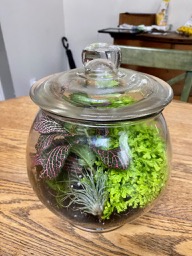
A couple of days ago while hanging out on the couch, I looked at the plants sitting around the room, snuck out to a crafts store for a large jar, and made a terrarium. Because what are we all, now, if not organisms living in closed worlds? Rhetorical question, but still.
Maybe “shelter in place” is what I really need right now. A lot of changes have been happening. I need a period to grow harmoniously in my space and make something. Anything.
Like a lot of people, I used to have another blog. It was called “Carbonara di Niente” and got very few hits. One Sunday morning in 2016 around 3:30, I deleted all the content out of anger. Cut to 4 years later, boy do I wish I still had all that content. You can, it turns out, delete something completely from the web.
More than the content, I miss the state of mind of telling stories. So, here I go with a few.






 Lo Scriviti