Image: Shutterstock
One fall morning, early November, 17-year old Carol Anne kissed her mother Sarah goodbye as her father David loaded her suitcase into the family car. The car started down the driveway, passing the dormant Crape Myrtles on one side and a small planted field on the other, and she took a last look at the white house. It was plain, with small windows, 7 rooms and a wrap-around porch.
Carol had turned 17 that day and was taking the train from Waycross to stay with her Aunt Ida in Atlanta. Her brown wool skirt, carefully hand-sewn by her mother and herself, scratched her long legs because there was no lining, and her toes felt tight in her saddle oxfords.
She kissed her father goodbye at the station before boarding, and promised to bring him something from her new home.
As a tall girl with hazel eyes and perfect teeth, she was able to find work selling costume jewelry at Rich’s department store. Carol took advantage of the small discounts for sales clerks and shopped the sales for clothes much fancier than she had back home.
Each day when she went to work at Rich’s, she looked at the men’s clothes and appurtenances. What could she bring her father? He worked hard at the Waycross railroad and often came home dirty. Then he worked the field beside their house to grow corn and beans as his back aches intensified. At 6 p.m. each night, he presided over the dinner table of 7 teen-aged children and a tired wife.
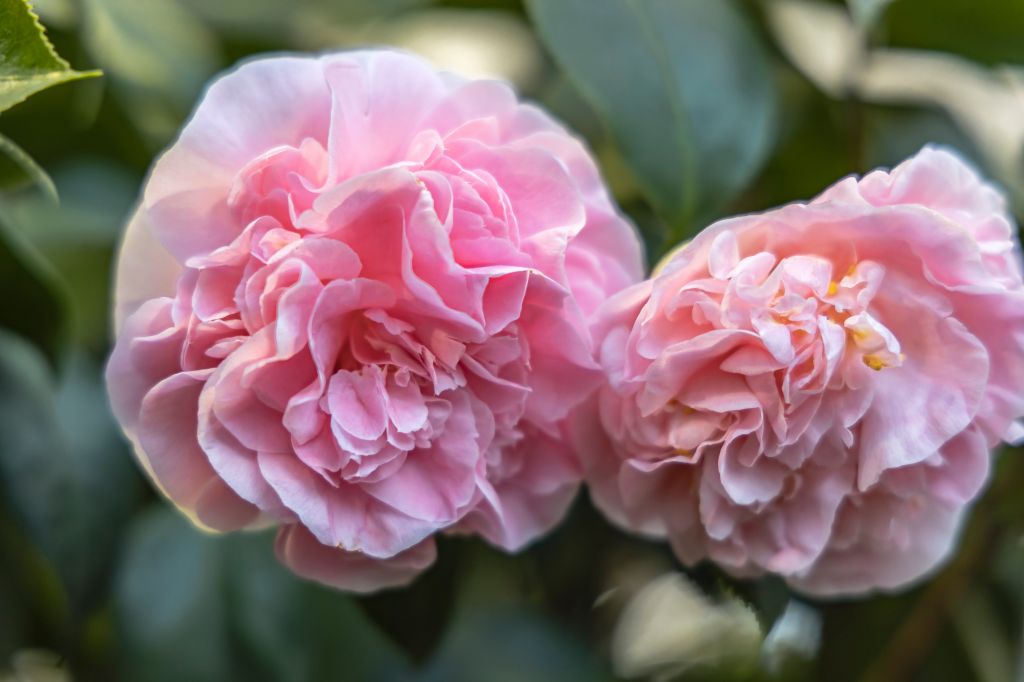
But Carol loved to bundle up in her American Beauty coat and walk in Ida’s small back yard, marveling at the iris, with its petals wrapped tight like swirling skirts, and the peeking tulip shoots. In particular, she loved to examine the pale, baby skin-colored flowers of the fancy camellia. Its petals were completely symmetrical in tight circles, and the center petals formed a tight bud around the stamens until full bloom. At this time, in March, the buds were mostly closed but there were a few open on the south, sunny side of the yard.
On her first visit back home, she spotted her father’s Ford from across the tracks to the North-bound side and nervously walked toward him. She was in a red suit she’d saved for, with a pillbox hat and new high heels that still hurt a little. She carried a store shopping bag with a change of clothes and a small packet wrapped in aluminum foil. Her father greeted her with a stiff hug and an approximate kiss that she knew to expect, and he asked briefly about her trip. As he released his hug, Carol produced the foil packet from her shopping bag – a longish woody stem with shiny, symmetrical dark green leaves and two flowers that looked like ball gowns. “It’s a Debutante camellia japonica Aunt Ida gave me,” she explained when he pointed at the plant.
The windows of the Beville Street house are boarded up except for small crevices; the staircase is a canted pile of rotting boards, and in the old kitchen, the long rust-covered 1930s farm sink lies upside down on the falling floor.
But the Debutante from that sprig is now over 8 feet tall, planted toward the back of the yard near the scuppernong arbor, and dances with pale pink, ballerina-skirted flowers in late winter and early Spring.
 Lo Scriviti